
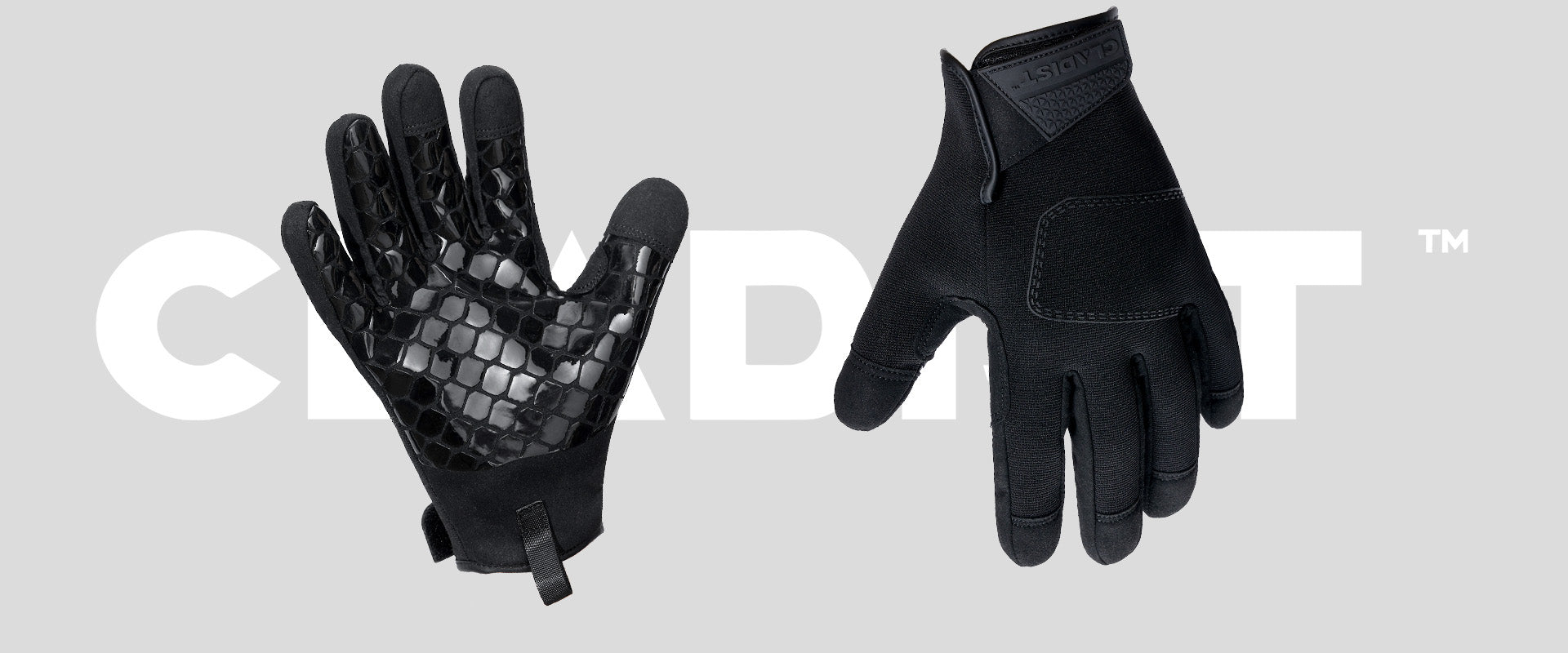
For years, most cut resistant gloves followed the same basic approach:
Increase protection by increasing material thickness.
The problem is that thicker gloves often create new limitations — reduced flexibility, poor grip precision, restricted hand movement, and faster fatigue during extended use.
This is why many traditional high cut resistance gloves feel stiff and overly industrial, especially during detailed tasks such as gardening, woodworking, DIY repair, landscaping, or tool handling.
Modern ANSI A9 gloves are engineered differently.
Today, high-level hand protection is no longer based only on adding more material. It is increasingly based on how effectively a glove can manage and redistribute force.
Because in real-world cutting scenarios, failure usually begins at one small point of concentrated pressure.
Why ANSI A9 Protection Is Difficult to Achieve
ANSI A9 is one of the highest cut resistance classifications under the ANSI/ISEA 105 standard.
At this level, glove materials must withstand extremely high cutting force before penetration or structural failure occurs.
However, the real engineering challenge is not simply resisting force.
The challenge is resisting force while still maintaining:
- Flexibility
- Grip stability
- Dexterity
- Breathability
- Long-duration comfort
Traditional anti-cut gloves often struggle because protection depends too heavily on dense yarn structures or thicker reinforcement materials.
While this may improve laboratory cut ratings, it often reduces usability during actual work.
Modern protection systems approach the problem differently.
Instead of concentrating force resistance into one thick layer, they distribute mechanical stress across multiple specialized structures.
The ARMEX Composite Protection Architecture
At the center of the glove is the ARMEX Composite Protection Architecture — a 5-layer composite system engineered to manage how cutting and puncture force moves through the glove structure.
Rather than functioning as separate materials, all five layers work together as a single integrated protection system.
The outer layers stabilize grip and structural durability.
The central ARMEX composite core manages force dispersion and puncture resistance.
The inner layer regulates airflow and long-term wear comfort.
This multi-stage structure allows the glove to achieve ANSI A9 cut resistance while remaining significantly more flexible and wearable than traditional heavy-protection gloves.
Why Force Dispersion Matters
When a sharp edge contacts a glove surface, force immediately concentrates into an extremely small pressure point.
That localized pressure is what causes cutting failure.
The dual ARMEX nano composite layers were engineered specifically to reduce this pressure concentration effect.
Instead of allowing force to remain focused at a single penetration point, the composite structure redistributes energy laterally across surrounding material zones.
This reduces direct penetration stress while improving resistance against:
- Blade cuts
- Sharp metal edges
- Needle punctures
- Thorn penetration
- Abrasive tearing
- Splinter impact
Unlike traditional anti puncture gloves that rely heavily on stiffness, the ARMEX nano-fluid composite structure maintains flexibility because protection is achieved through force management rather than material bulk alone.
The result is a thinner, more responsive protection layer capable of combining:
- ANSI/ISEA 105 A9 cut resistance
- ANSI puncture resistance level 5
- ANSI needle protection level 5
- EN388 level F cut performance
- Flexible movement capability
- Long-term abrasion durability
The Supporting Layers Behind the Protection System
The outer hexagonal silicone grip structure was engineered to stabilize surface contact under changing pressure conditions.
Traditional flat-palm gloves often lose friction consistency during angled lifting or repetitive movement. The raised silicone geometry increases multi-point surface contact to improve grip stability and handling control.
Beneath the grip layer, the reinforced microfiber structure acts as a flexible support matrix designed to maintain durability without restricting hand movement.
The microfiber layer improves:
- Abrasion resistance
- Structural stability
- Repetitive flex durability
- Moisture management
- Long-term wear comfort
The final inner plain-weave layer improves airflow and reduces internal friction against the skin during prolonged use.
Together, these supporting structures allow the protective core to function more efficiently without sacrificing usability.
Why Modern Cut Resistant Gloves Are Evolving
Modern users no longer want protection that only performs well in laboratory testing.
They want protection they can realistically wear.
That is why modern ANSI A9 gloves are increasingly used not only in industrial environments, but also in gardening, landscaping, woodworking, garage work, DIY repair, and workshop applications.
Because effective hand protection is no longer just about resisting force.
It is about controlling how force moves.
Share:
Why Most Hand Injuries Happen During Everyday Work — Not Industrial Jobs