
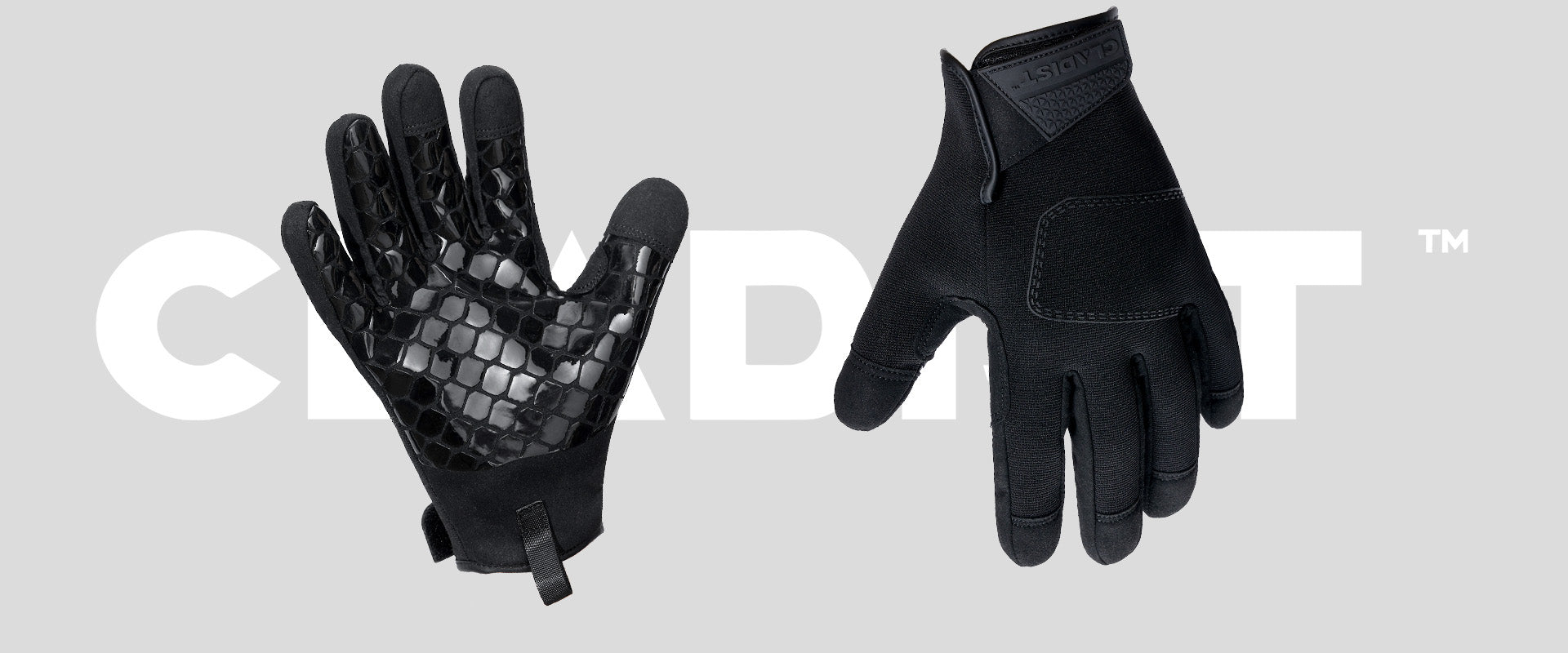
When people think about hand protection, they usually focus on cut resistance or puncture resistance.
But many hand injuries begin much earlier — with loss of control.
A slipping tool, unstable grip, shifting pressure point, or sudden hand movement can redirect force toward the hand in a fraction of a second.
In many real-world situations, grip stability is not just about comfort.
It is part of the protection system itself.
Why Grip Failure Causes Injuries
During tool handling, force constantly shifts across the hand surface.
This becomes especially noticeable during:
-
Gardening
-
Woodworking
-
DIY repair
-
Garage work
-
Glass handling
-
Metal operation
-
Power tool use
Smooth surfaces, sweat, moisture, repetitive motion, and awkward lifting angles can all reduce friction stability.
When grip weakens, users naturally compensate by increasing hand pressure or adjusting finger position.
This often creates unstable force movement and increases injury risk.
In many cases, the problem is not tool sharpness alone.
It is loss of handling control.
Why Flat-Palm Gloves Often Lose Friction
Traditional glove palms often rely on flat coatings or basic textured surfaces.
The problem is that flat contact zones distribute pressure unevenly during movement.
As grip angle changes, friction consistency decreases.
This becomes more noticeable when handling:
-
Smooth metal surfaces
-
Glass
-
Wet tools
-
Power equipment
-
Vibrating tools
Modern grip engineering approaches the problem differently.
Instead of maximizing surface area alone, advanced grip structures increase multi-point contact stability.
How Multi-Point Grip Structures Improve Control
Raised silicone geometries help stabilize contact pressure across multiple friction zones instead of relying on one flat surface.
As pressure shifts during movement, multiple raised contact points maintain more consistent friction behavior.
This helps improve:
-
Grip stability
-
Handling precision
-
Surface control
-
Tool responsiveness
-
Slip resistance during repetitive movement
The result is not only better comfort.
It is more predictable force control during actual work.
Why Grip Is Becoming Part of Modern Protection Design
Modern protective gloves are evolving beyond simple cut resistance ratings.
Today, hand protection increasingly combines:
-
Force management
-
Grip stabilization
-
Flexibility
-
Dexterity
-
Structural durability
Because preventing injury is not only about resisting force after contact happens.
It is also about maintaining control before force becomes dangerous.
That is why engineered grip systems are becoming an increasingly important part of modern ANSI A9 gloves and advanced protective glove design.
Share:
Cut Resistance vs Puncture Resistance: Why They Are Not the Same